









If you are looking for a dinner that’s quick, satisfying, healthy, and elegant in a rustic sort of way, then asparagus farro risotto is for you.
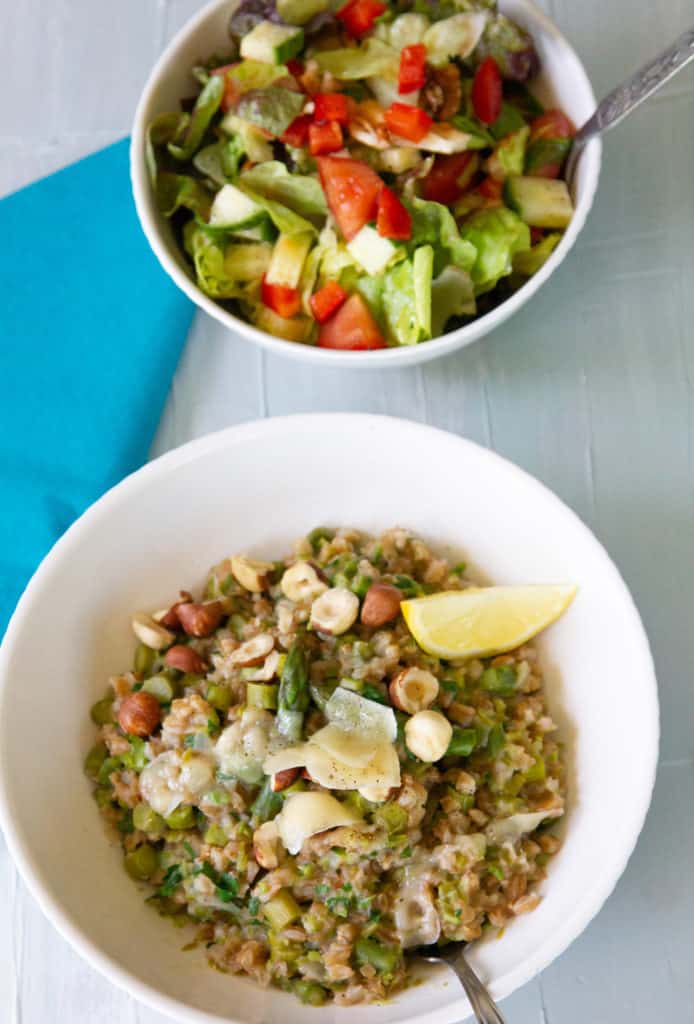
Asparagus farro risotto is balancing for digestion in spring and summer, and a nourishing dish that’s perfect for lunch or supper.
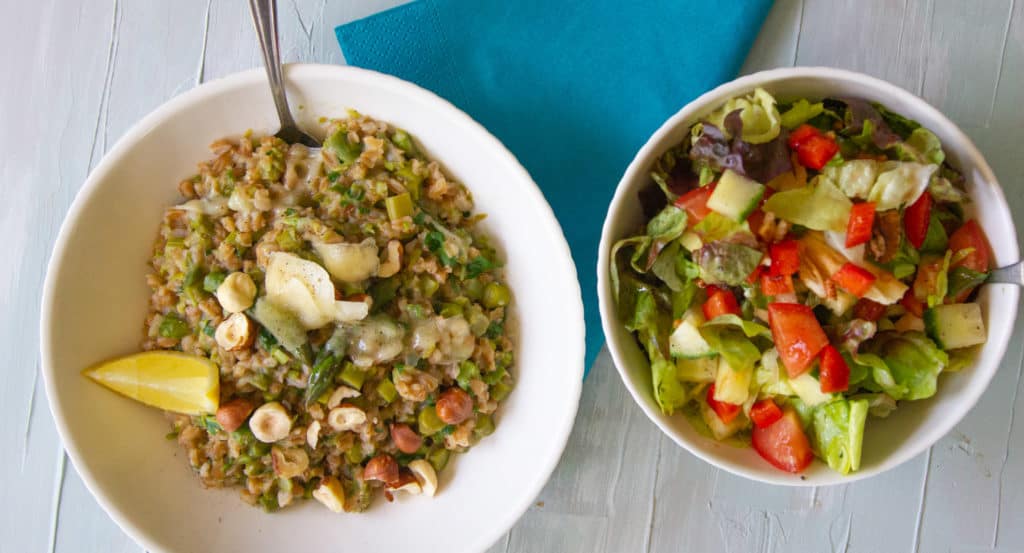
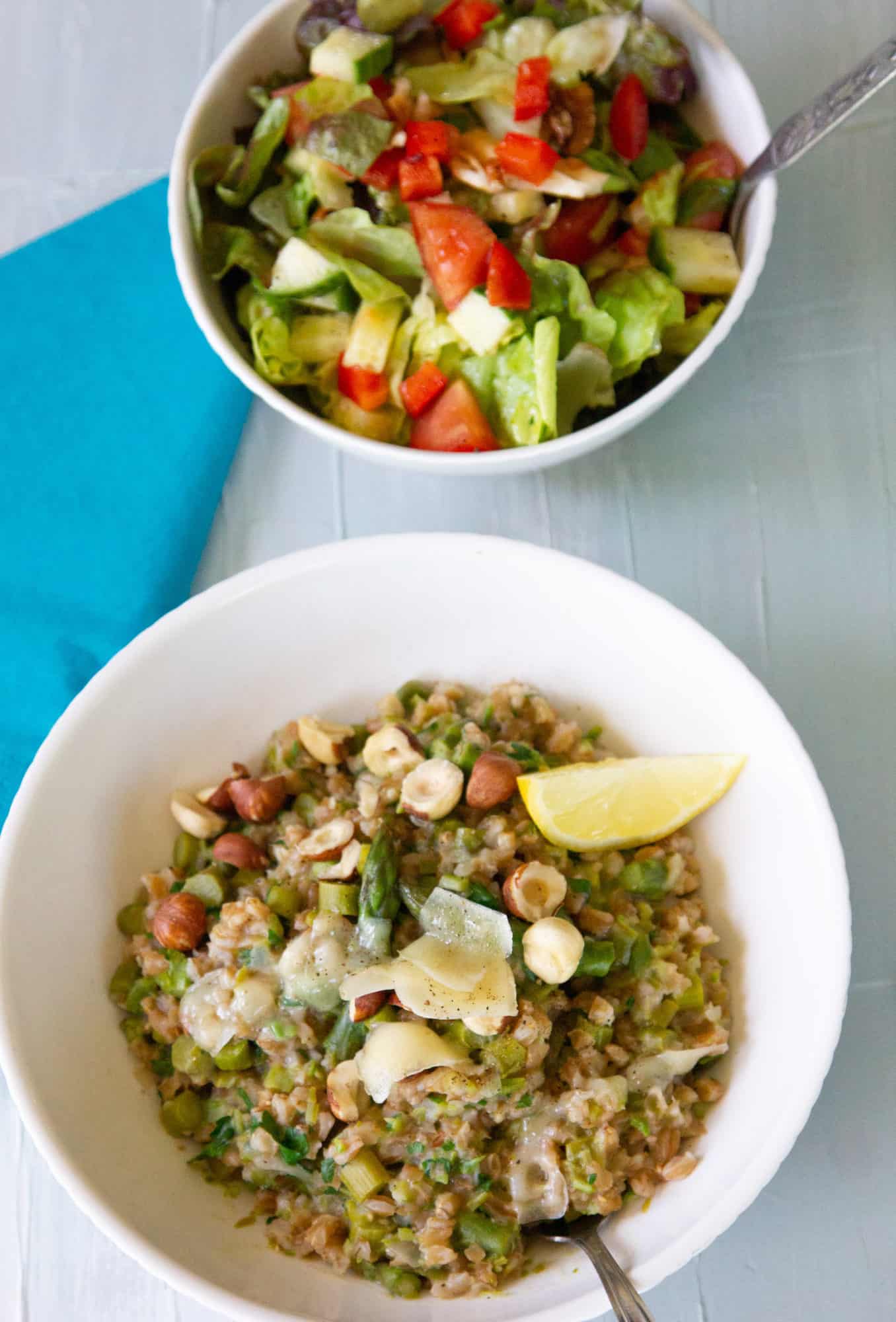
Complete your meal with a green salad if you like, dressed with a simple vinaigrette.
Keep reading to learn why both asparagus and farro are gut-healthy foods, and why you might want to adopt them into your regular diet.
Health Benefits of Asparagus
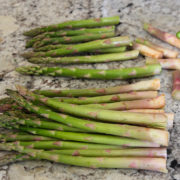
After a winter diet heavy on root vegetables, the arrival of asparagus in spring is a welcome change.
According to the natural system of medicine known as Ayurveda, the qualities of asparagus are light, cooling, and dry. These qualities are balancing for the typical spring weather, which tends to be damp and heavy.
Asparagus is also alkalizing, and full of prana, orlife force energy.
Asparagus is full of vitality because it doesn’t store well after being picked, so the green spears are bound to be relatively fresh. Ayurveda says that the fresher an ingredient is, the more vitality it has.
Medicinally, asparagus cools and purifies the blood by eliminating toxins through the urinary tract.
You may have noticed that your pee smells funny soon after eating asparagus. Not to worry. That’s asparagine, a chemical that smells like acetone. It shouldn’t last longer than a day.
You may also notice that you have to use the bathroom more frequently, and this is because asparagus is a diuretic.
Eating more diuretic foods can be really helpful if you are prone to congestion or retaining water, which are typical experiences in the spring season.
There’s also a demulcent or slippery quality to asparagus that is anti-inflammatory and soothing for the digestive tract.
Farro, an Ancient Grain
Farro, pronounced FAHR-oh, is an ancient form of wheat.
Technically farro could refer to einkorn, emmer, or spelt, but in the United States it is typically emmer wheat.
Being an ancient grain, farro is lower than gluten and much easier to digest than modern wheat.
The farro you buy will be either pearled (slightly hulled), or completely whole. This will determine the cooking time, from 15 minutes to as long as 45 minutes.
Most likely the farro you buy will be pearled. Just check the cooking instructions for suggested timing, and continue simmering the grain until you receive the consistency you desire.
Cooked farro has a pleasant chewy texture, with a slightly nutty taste. Today we are turning farro into risotto, but you can easily enjoy farro in soups or salads.
Easy Peasy
Overall, this asparagus farro risotto is rich and satisfying, and very easy to make.
Set aside those horror stories you’ve heard about making risotto. That’s not what this is. If you can simmer, you can make this.
Here’s what you can expect.
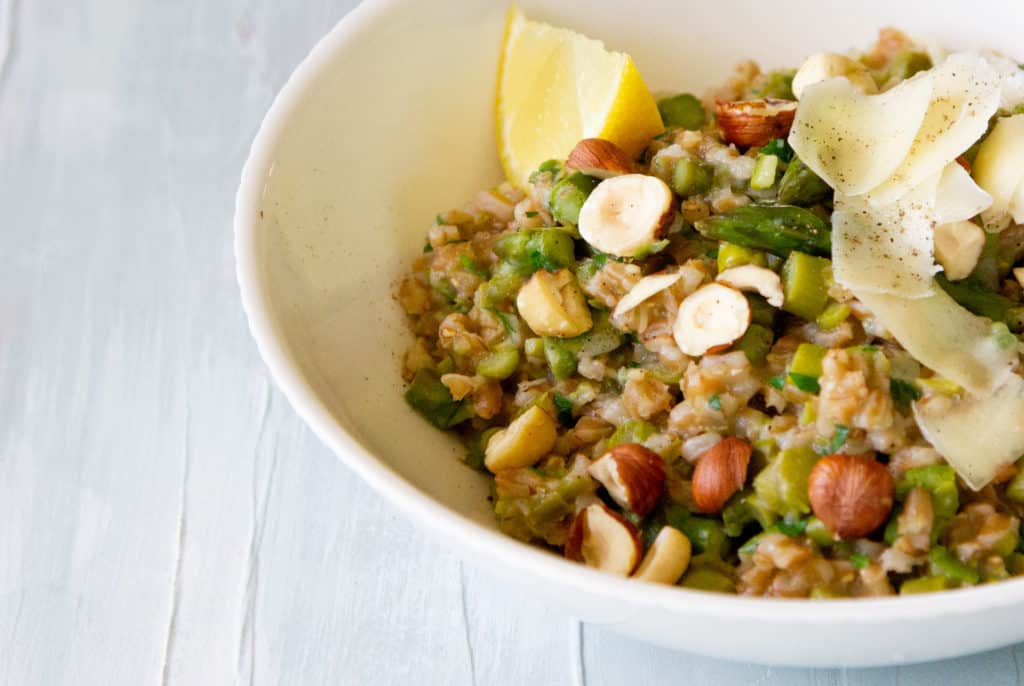
Just imagine your asparagus and farro, flavored with butter or olive oil, onion, white wine vinegar, parsley, and black pepper, and topped with optional shaved Parmigiano Reggiano and toasted hazelnuts.
Simple and hubby approved. He specifically enjoyed the drops of fresh lemon on top. Are you getting hungry yet?
Related Recipes You May Enjoy



Recipe for Asparagus Farro Risotto
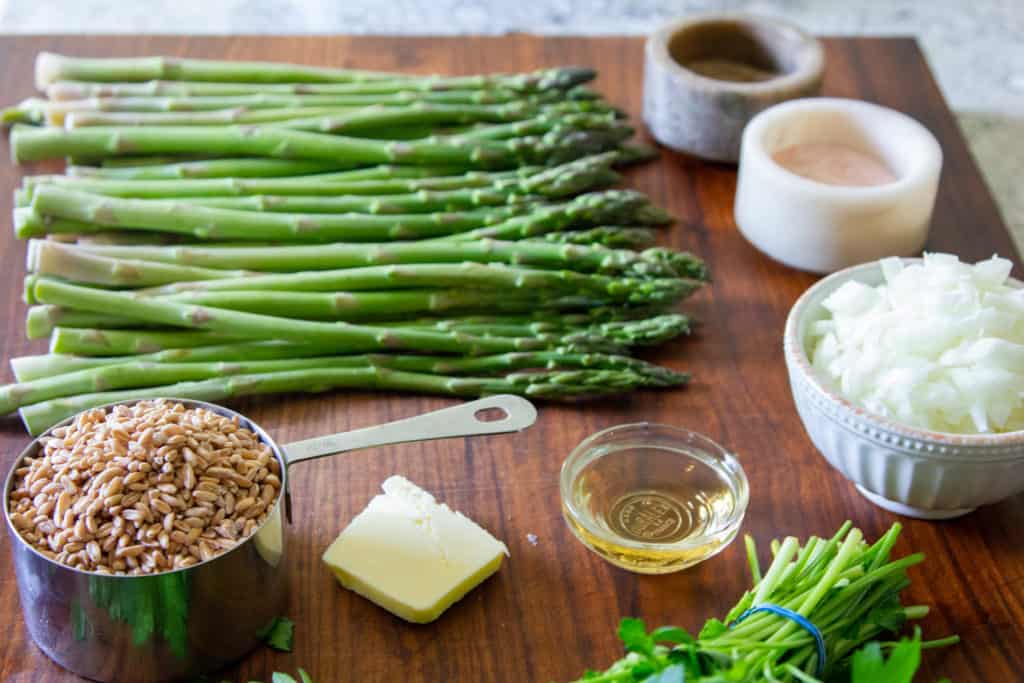
Ingredients
- 1 tablespoon butter or extra virgin olive oil
- 1 cup onion, finely chopped
- ¾ cup farro
- 1 tablespoon white wine vinegar
- ½ teaspoon Himalayan pink salt
- 2 ½ cups water
- 2 cups asparagus, finely chopped
- ½ cup parsley, minced
- pinch freshly ground black pepper, freshly ground
for the garnish
- Parmigiano Reggiano, shaved
- hazelnuts, toasted and chopped
Instructions
- Heat a medium saucepan on medium-low heat. Add butter and finely chopped onion. Cook, stirring occasionally, until the onion softens, about 5 to 7 minutes.
- Add farro, white wine vinegar, and salt, and stir well for 1-2 minutes to remove any coating on the bottom of the saucepan. Add water and bring to a boil. Reduce heat to low, cover, and cook for 20 minutes.
- After 20 minutes, begin tasting the risotto. You want the grains to be tender, but still a little chewy. It could take as long as 45 minutes to reach this stage. Add more water if needed. It is okay if there is a little liquid left in the end. In fact I prefer that.
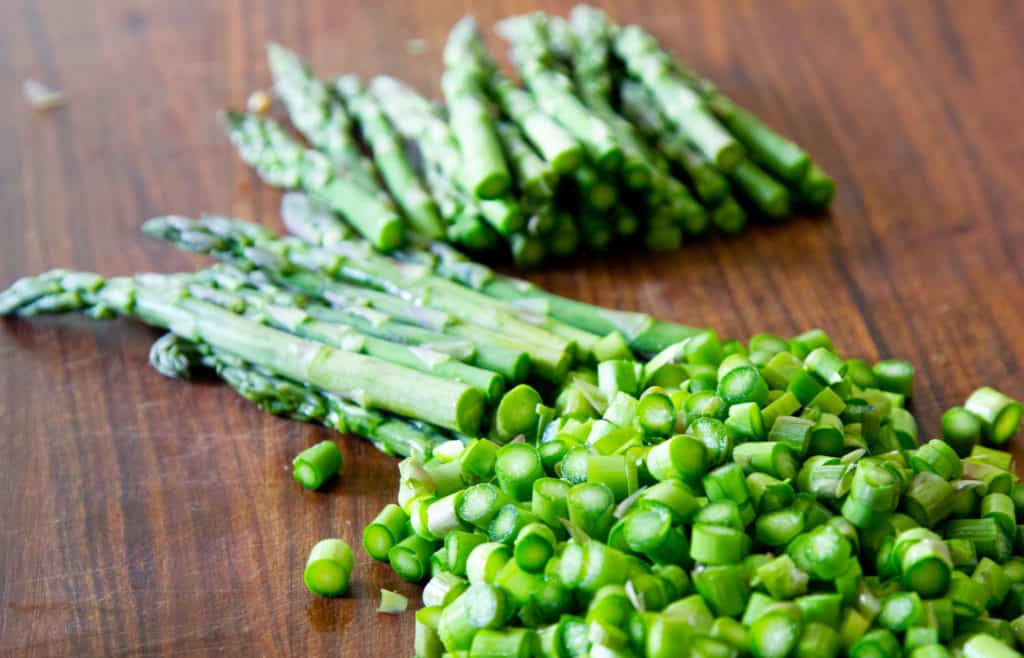
- Five minutes before the farro is cooked to your liking, add finely chopped asparagus. When you prepare the asparagus, separate the stalks from the tender spears. Add the chopped stems first and cook for 2-3 minutes, then add the spears, and cook until asparagus is just tender.
- Turn off the heat and pulse half the dish with an immersion blender to create a smoother texture, and make it easier to digest the farro. Stir in the chopped parsley and freshly ground black pepper. Taste, and adjust for salt.
- Dish risotto into individual bowls. Add optional garnishes, such as shaved Parmigiano Reggiano and hazelnuts. Sprinkle on more black pepper and a little fresh lemon if you like.
Notes
Nutrition

Leave a Reply